
AI Didn't Replace My Two Best Specialists. It Redefined Their Jobs.
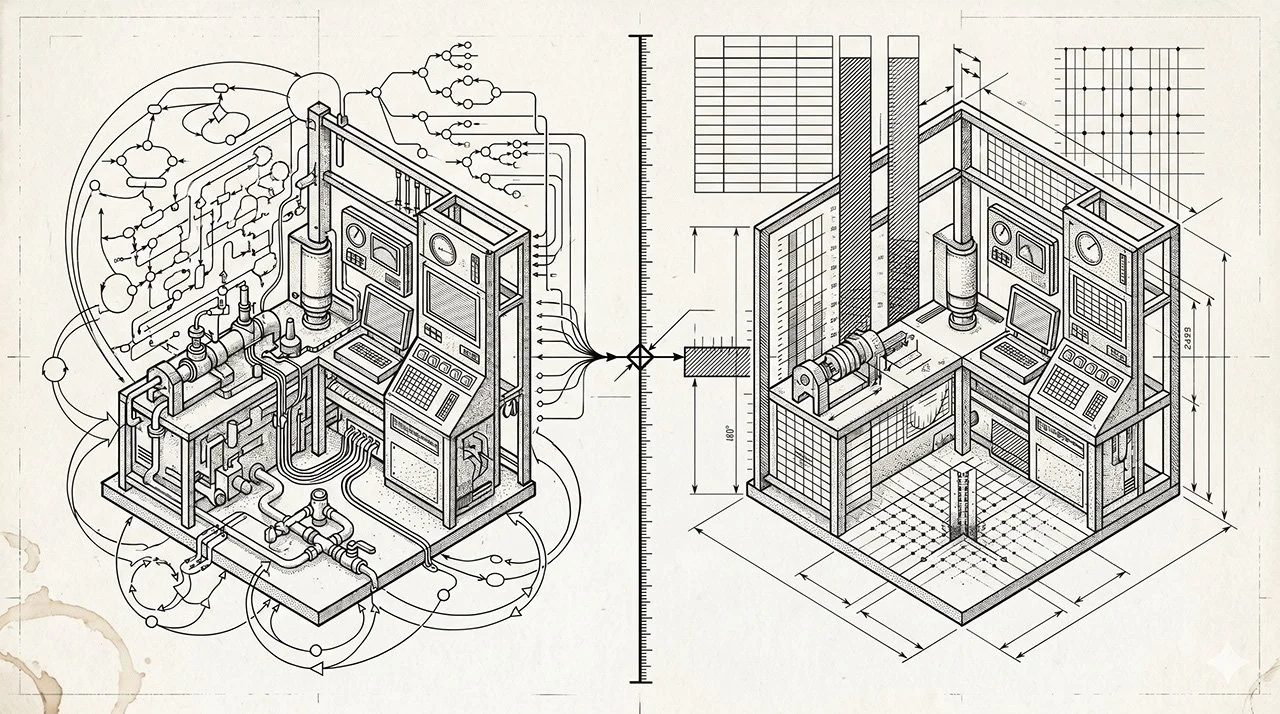
Before I had the budget to promote anyone, I already knew what the org chart should look like.
That's not arrogance; that's how corporate works. If you're a leader waiting for resources before you plan your structure, you'll spend your career reacting instead of building. Within the first month or two of my role at Zinus, I had a clear picture of what I needed: one person who owned AI operations and one person who owned data integrity. Two roles. Two distinct areas.
The challenge was that neither role existed yet. The team was carrying a full customer support load, and nobody had the runway to take on technical work. Before I could promote anyone, I had to create the conditions for promotion.
Create the Conditions First
This part rarely makes it into blog posts about team-building, but it's where the real work happened.
Over several months, we deployed an internal AI copilot, rebuilt workflows, and relentlessly worked to drive down average handle time (AHT). As the team got more efficient, two things happened: our customers got better service, and I started to see which team members had the instinct for technical work. Ambition reveals itself when you create room for it.
Both of the specialists we eventually promoted came from Tier 2 frontline support. Before the AI and workflow work, their days were consumed with customer contacts, i.e., volume, routing, resolution. There was no room in the system for them to develop technical skills. Once there was slack, we knew it was time to make a move.
The moves I was making weren't always visible inside the organization. That's also how corporate works. When you're building toward something, not every piece is placed publicly. But there was always a plan.
Why One Person Can't Answer Both Questions
If you're running AI in customer care, you're operating two distinct systems simultaneously: the AI layer and the data layer underneath it. They interact constantly, but they require different expertise to manage.
The mistake most teams make is assuming a smart analyst can handle both. And maybe they can, for a while. But the moment volume grows, you get a bottleneck. The senior generalist becomes the single point of failure for issues that should be routing to two different places.
I've seen what happens when teams don't make this split: analysts get pulled into troubleshooting AI behavior when they should be focused on data integrity. QA leads are asked to validate model output without the tooling to do it properly. Issues fall between two stools. The reporting drifts. The AI works, mostly, but nobody can prove it.
The clean version is two specialists, each answering one question:
Is the AI working?
and
Do we trust the numbers behind it?
The Two Questions
Is the AI working?
This is the operational and behavioral question. My AI specialist owns it. Every week, he's reviewing containment rates, escalation patterns, and classification accuracy. He's digging into conversations where the AI failed; where customers got stuck in loops, abandoned, or escalated unexpectedly. He identifies knowledge base gaps before they become customer complaints. He's in regular contact with our AI vendor, surfacing issues from the floor that our vendor-side contacts wouldn't catch on their own.
His recurring deliverable is a short weekly memo. Not a dashboard dump but a memo with a narrative. What's working, what's not, what needs attention, and what he's recommending. That memo becomes our gameplan for the next week/month.
Do we trust the numbers?
This is the data integrity question. My data specialist owns it. He's responsible for the metrics that everything else depends on: average handle time, first contact resolution, CSAT, deflection rate. His job is to make sure those numbers are clean before they reach anyone's eyes.
He runs our CRM data audit, maintains our reporting pipeline, and catches drift before it becomes a problem. When a number looks off, he's the one who either confirms it or flags an upstream issue. He's also being developed into our internal CRM platform expert, meaning if there's a non-AI platform issue, he's the first stop.
The Handoff That Makes It Work
We do weekly reviews and this is where the two roles meet. My AI specialist owns the narrative: he tells the story of what the AI did this week. My data specialist owns the numbers: he validates that the story is backed by clean data. They're doing different jobs in the same meeting.
That split creates built-in checks and balances. Neither one can run too far in the wrong direction without the other surfacing it. And because I've been intentional about giving both of them visibility by copying them on relevant emails, adding them to vendor meetings, praising them in front of leadership and behind their backs; the rest of the organization is starting to understand what they own.
Visibility matters. A lot of leaders keep their developing team members behind the curtain. That's a mistake. If you want people to grow into roles, other people need to see them acting in those roles. Bring your team to the table.
The day-to-day is also just... human. We have unscheduled calls, we message each other constantly, we think out loud together. The formal structure creates clarity; the informal relationship creates speed.
What the Numbers Actually Show
AHT has gone down. CSAT has gone up.
I'll leave the specifics there because the numbers aren't the point. The point is that both moved in the right direction simultaneously, which is what happens when you have people who own specific problems with clear accountability. Metrics drift when nobody owns them. They improve when someone wakes up every morning thinking about them.
The Career Path That AI Actually Creates
Here's the counter-argument to "AI replaces juniors."
Both of these specialists were doing frontline customer support eighteen months ago. They're now doing advanced technical work, AI operations and CRM data management, at a level that didn't exist in their org chart before I joined. The AI work didn't displace them. The AI work is the reason they have development paths.
This is what I mean when I say AI amplifies instead of replaces. We were able to reduce the customer contact load through better AI and better workflows. That freed up capacity. That capacity became two technical roles. Those two technical roles are now building skills that will serve them for the rest of their careers.
The teams that tell a different story usually made a different decision: they automated the work and stopped there. They didn't ask what their people could do with the freed capacity.
AI in customer care doesn't eliminate roles. It reshapes what the roles are for.
The Routing Rule
One practical move that's prevented a lot of confusion: a clear routing rule communicated to the full team.
Non-AI issues go to one specialist. AI issues go to the other.
That's it. It sounds simple, and it is. But without it, issues route based on whoever happens to be available, or whoever someone on the team feels most comfortable messaging. That creates noise, delays, and a lot of "I thought you had that." The routing rule eliminates a whole class of coordination failures.
The Takeaway for Leaders
If you're building a customer care team that runs AI, plan for both roles from the start, even if you can't fill them yet. Know what each role is responsible for. Know what question each person is answering. Create the conditions for your best people to grow into the work.
The structure doesn't have to be visible to everyone on day one. But it should be clear in your own head. Because when the moment comes to make the move, you don't want to be figuring out the org chart at the same time you're announcing the promotion.
Start with the questions. The roles follow.
