SEO Research Agent: 16 Hours → 15 Minutes
The Problem
SEO research should be straightforward. It rarely is. Even experienced teams with tools like SEMrush face the same friction: competitor analysis, keyword research, cannibalization checks, then the real time sink—communicating findings to content teams.
One person emails another. Meetings get scheduled. Decisions require callbacks. Research for a single blog post can consume 16 hours across multiple people. I've seen this pattern at every company I've worked with.
The Approach
The foundation was 15 years of digital marketing experience. That's not a humble brag—it's the point. If you have deep expertise in any area, you can encode it into an agent and multiply your impact across your organization.
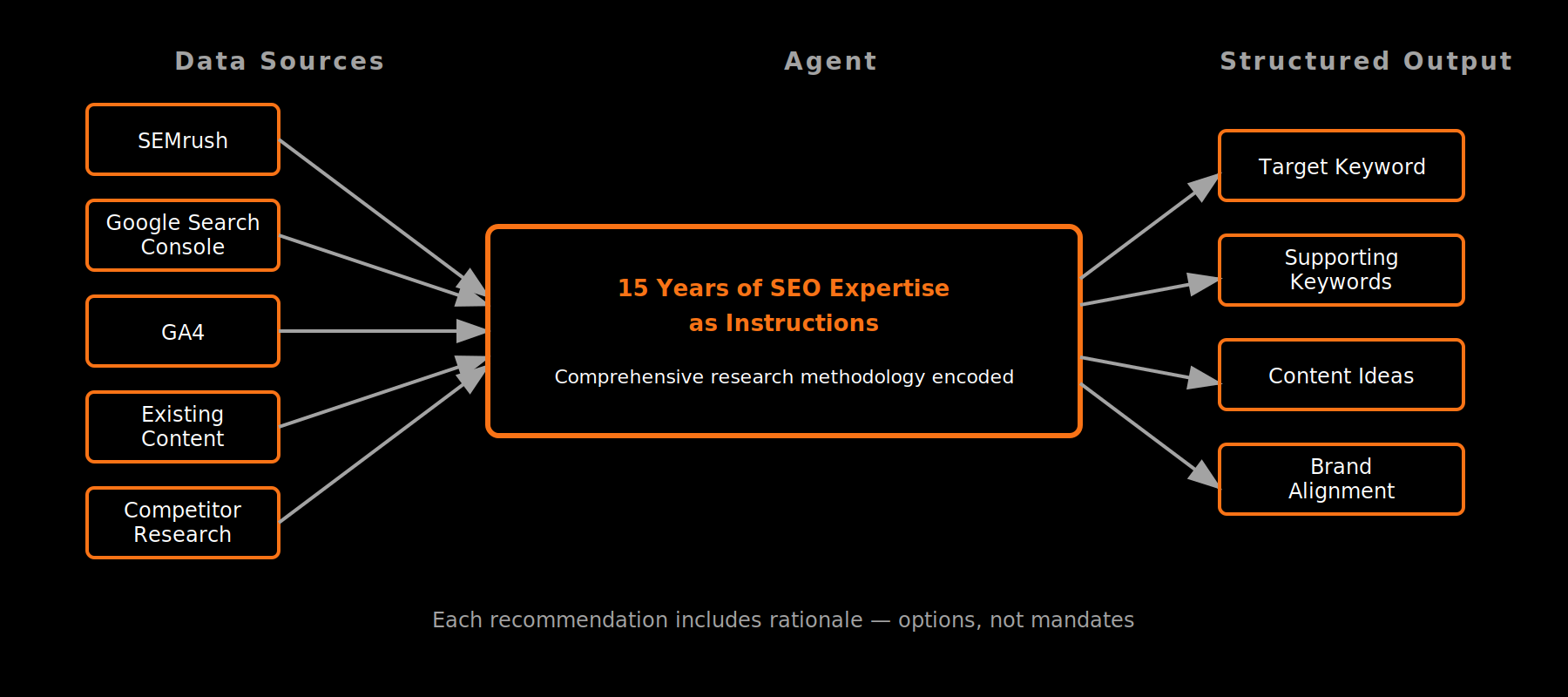
I wrote instructions as if I were personally conducting comprehensive research: pulling data from SEMrush, Google Search Console, GA4, reviewing existing content for gaps, analyzing competitors. Those instructions became the engine. Exported data from each platform became the knowledge layer.
One design choice mattered more than the rest: structured output with choices. The paradox of choice is real—too many options paralyze, too few frustrate. The agent returns a target keyword, supporting keywords, content angles, and brand alignment notes. Each recommendation includes the rationale. Users get options, not mandates.
The Result
Self-serve SEO research in under 15 minutes. No back-and-forth. No meeting roulette. Content teams get actionable recommendations with the reasoning behind them. I've implemented this pattern at multiple companies with consistent results.
Tools: Microsoft Copilot, ChatGPT, SEMrush