
She Built a Video Game
One of the underrated advantages of remote work is the time it gives you with your family. That advantage paid off recently when my daughter asked me to be her mentor for a school assignment.
The project was called an "apprentice" assignment. Students pick someone to learn from and document the experience across several sessions. She hears me talk about AI constantly, so her ask was simple: she wanted to build a video game using AI.
I had never built a video game before. I said yes immediately.
Day One: No Computers
After reading the assignment requirements, I mapped out seven sessions. The first one had nothing to do with computers.
She was a little disappointed when I told her we were starting with paper and pencil. I explained that most of my real work starts the same way, pen, paper, or a whiteboard before anything digital. She accepted that. She also likes to draw, so it was an easy sell.
That first session she sketched out the characters that would appear in the game.
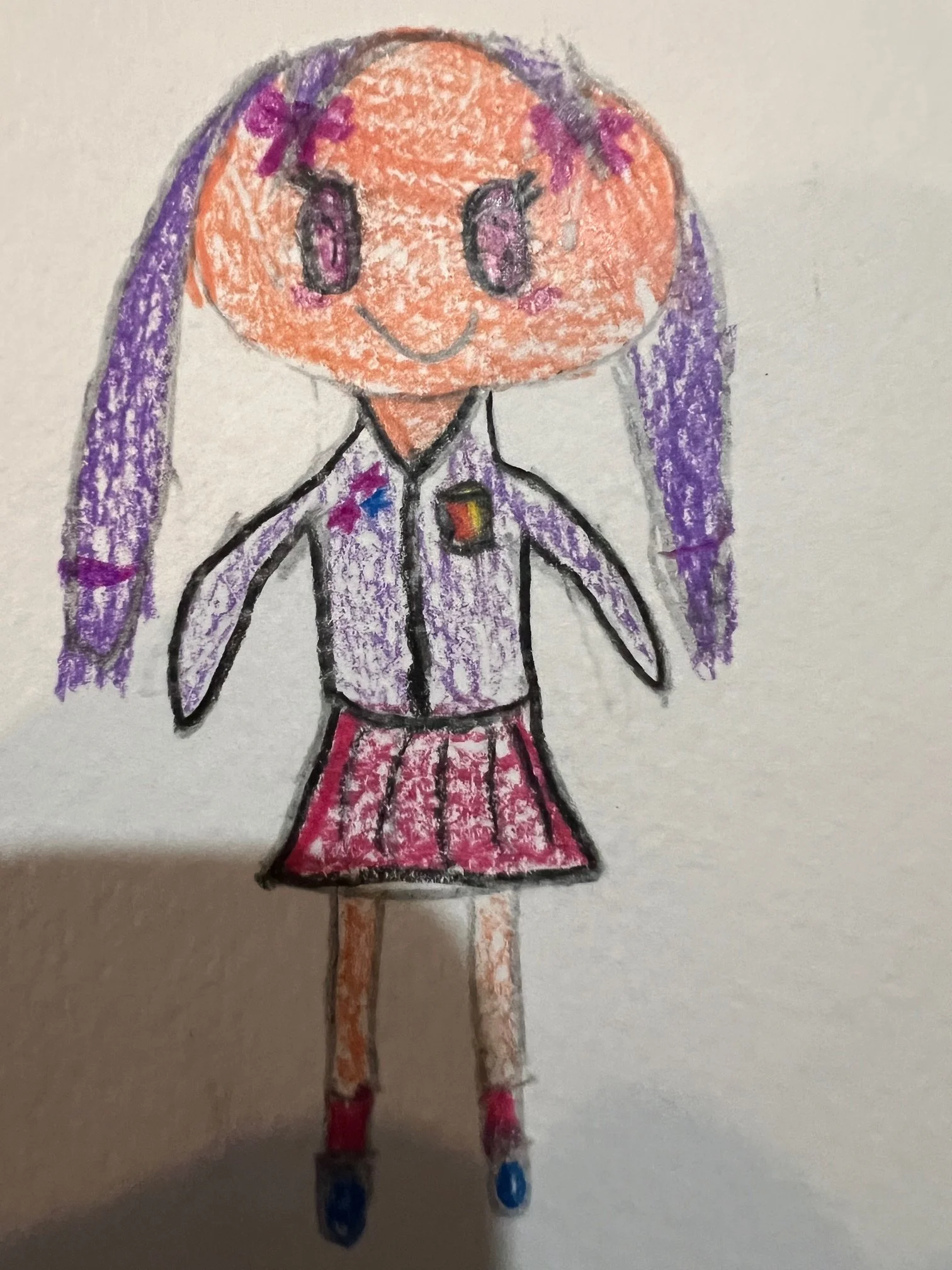
Her “girl hero”
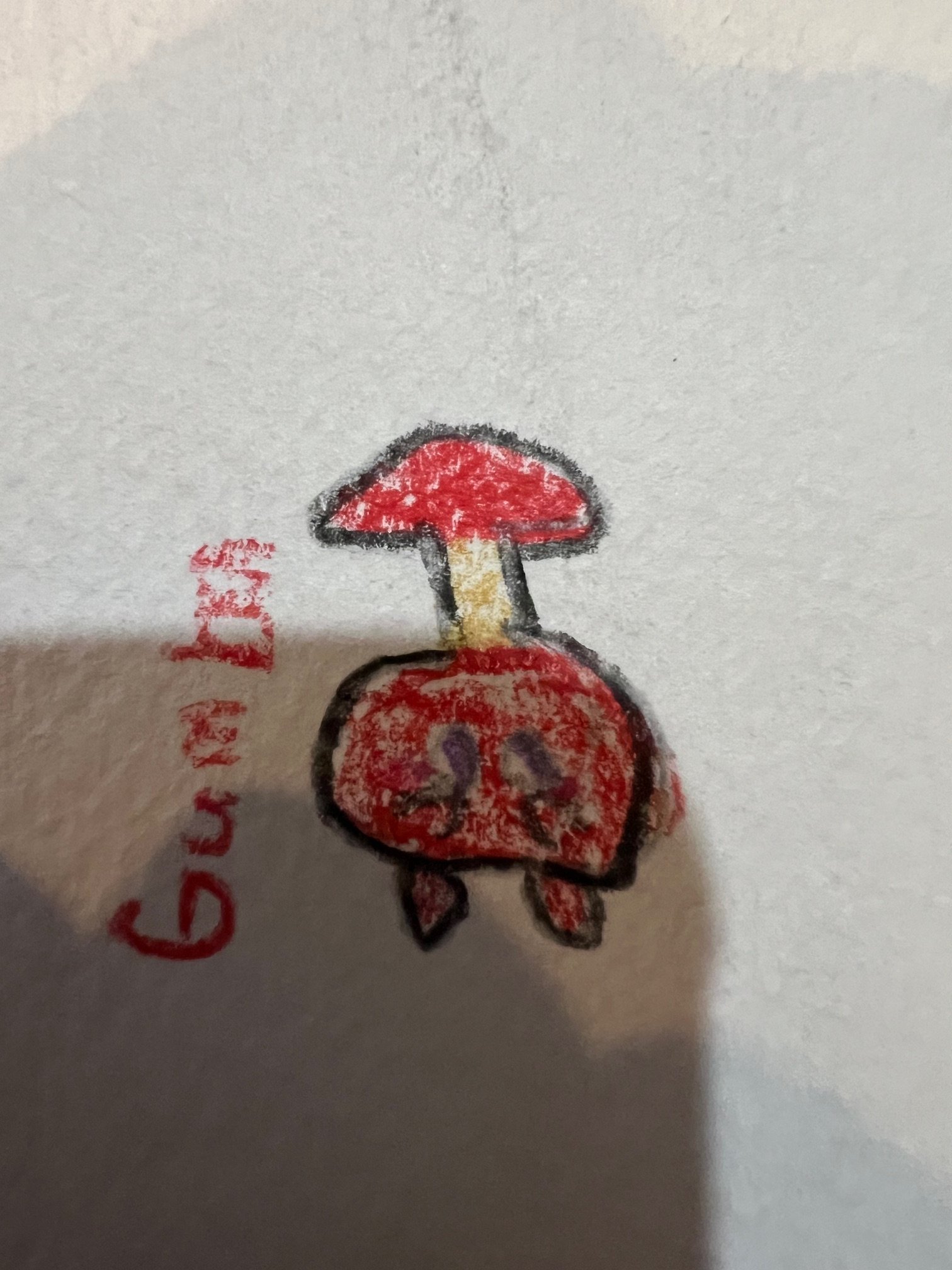
Her “gumba” (goomba)
Day two was more of the same. Level design on paper, no screens.
Day Three: Her Drawings Became Digital
By day three, she had earned the computer.
I explained that AI works best when you give it real data, and that data can be almost anything: numbers, text, or even hand-drawn sketches. We uploaded her character drawings into both Gemini and GPT to see what each platform would do with them.
She preferred GPT's style. Her hand-drawn characters became digital ones.
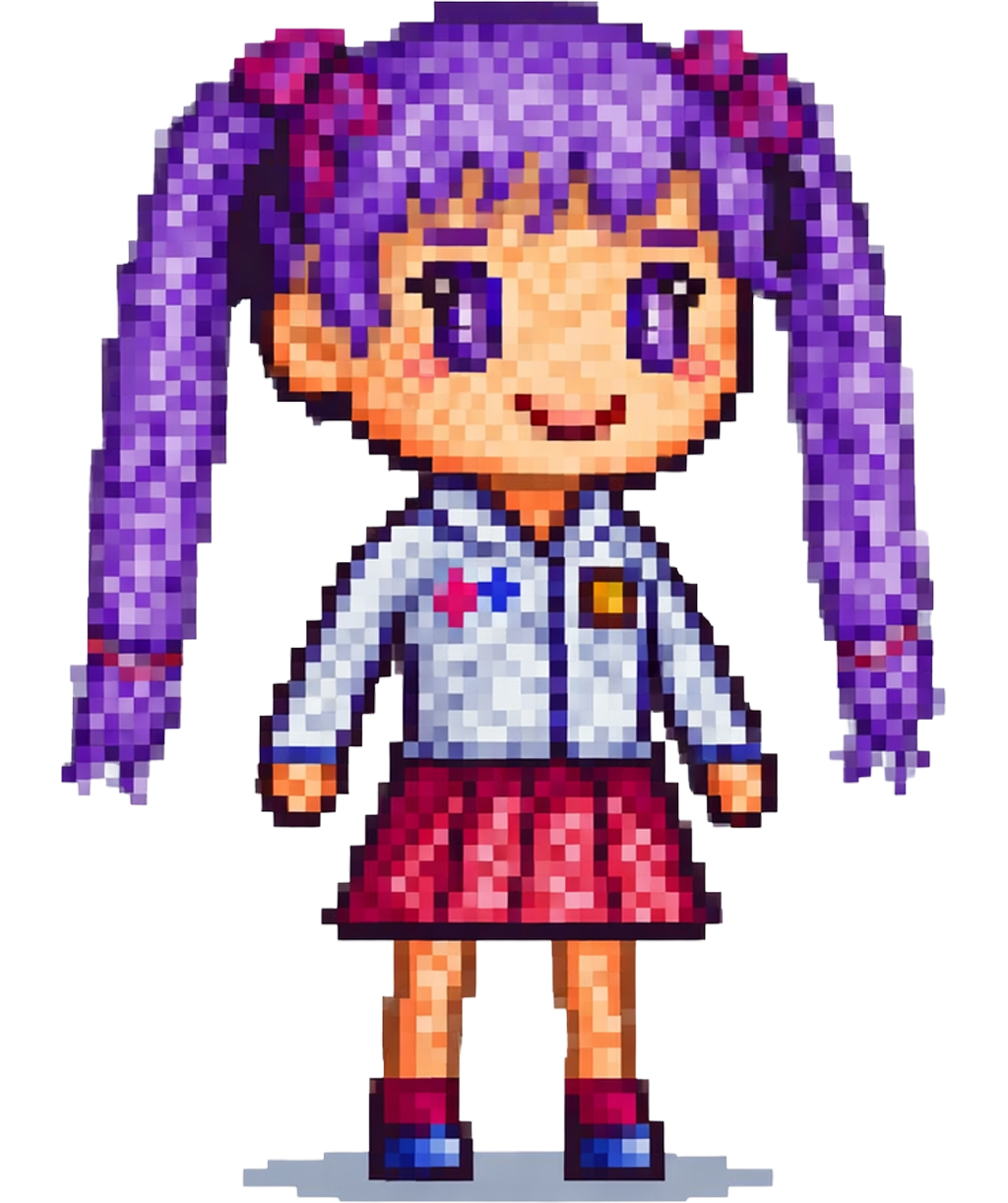
Her digital “girl hero”

Her digital “gumba” (goomba)
We packaged everything up and got ready for day four.
Day Four: The Hard Day
I knew day four would be the most demanding session, and it was.
We were building the actual game in Claude. Technically it's an interactive artifact that we'd export to GitHub, but to her it was just the game. I explained what a detailed prompt looks like and showed her that many of my prompts at work run 100+ lines. Then I let her dictate while I typed. In hindsight, I should have just used the voice function. But there was something fun about hearing her narrate her own game into existence.
The prompt covered everything: characters, controls, level design, enemies, the basics. Then we submitted it and took a short break. I told her it would take about ten minutes.
The first iteration was terrible.
Characters looked off, kept falling into pits, enemies were unbeatable, and the whole experience was just broken. My daughter was done. Ready to find a different mentor and a different project. I was devastated.
I looked through the code and saw a long list of problems. And I had a decision to make: let her quit, or push her through it.
I took a middle path. I tweaked the code just enough to make the game playable. It still needed significant work, but it was functional enough to keep her at the keyboard. We called it a day and left it there.
Days Five and Six: She Found Her Stride
Day five is when things turned.
We took the updated code and kept refining. Each prompt produced a measurably better game. By the end of the session, we had gone through six or seven iterations and she was starting to feel something shift. The game was hers, and she could see it improving in real time.
Day six brought a new problem: her older brother found a hack. He could beat the level every time with a specific set of keystrokes. My daughter and I were both impressed and annoyed, often the right reaction to a good hack. It was one of those fun family moments where my son smirked and my daughter and I had a telepathic conversation that we would get him. He left the room, and we patched it. By the end of that session, he actually had to try to win.
Day Seven: The Formula
By the final session, the project was complete.
Before her presentation, I had her memorize a simple formula:
Data goes into the prompt. Prompt goes into AI. AI gives an output. Output goes into GitHub.
She needed something she could say in front of her class, and that covered it.
I emailed her teacher the week of the presentation and asked if my daughter could play the game on the projector. Her teacher said yes.
She came home that afternoon excited. All the kids wanted to download it. And then she mentioned, with some pride, that most of the other presentations involved baking something.
She had earned her street cred.
What I Actually Took Away From This
When I reflect on day four, I keep coming back to something.
That moment, where the first iteration failed and she was ready to quit, that was the most honest version of what technical work actually looks like. Anyone who has done real project work has been in that spot. Things break. The first output is usually bad. You either push through or you don't.
She pushed through. I was proud of her for that; day four wasn't easy, and she came out the other side.
The end result is a fun little game that's live right now. It's a good way to burn a few minutes between meetings.
